Polyester
The workhorse of volume production — dimensionally stable, colour-fast and engineered rather than grown.
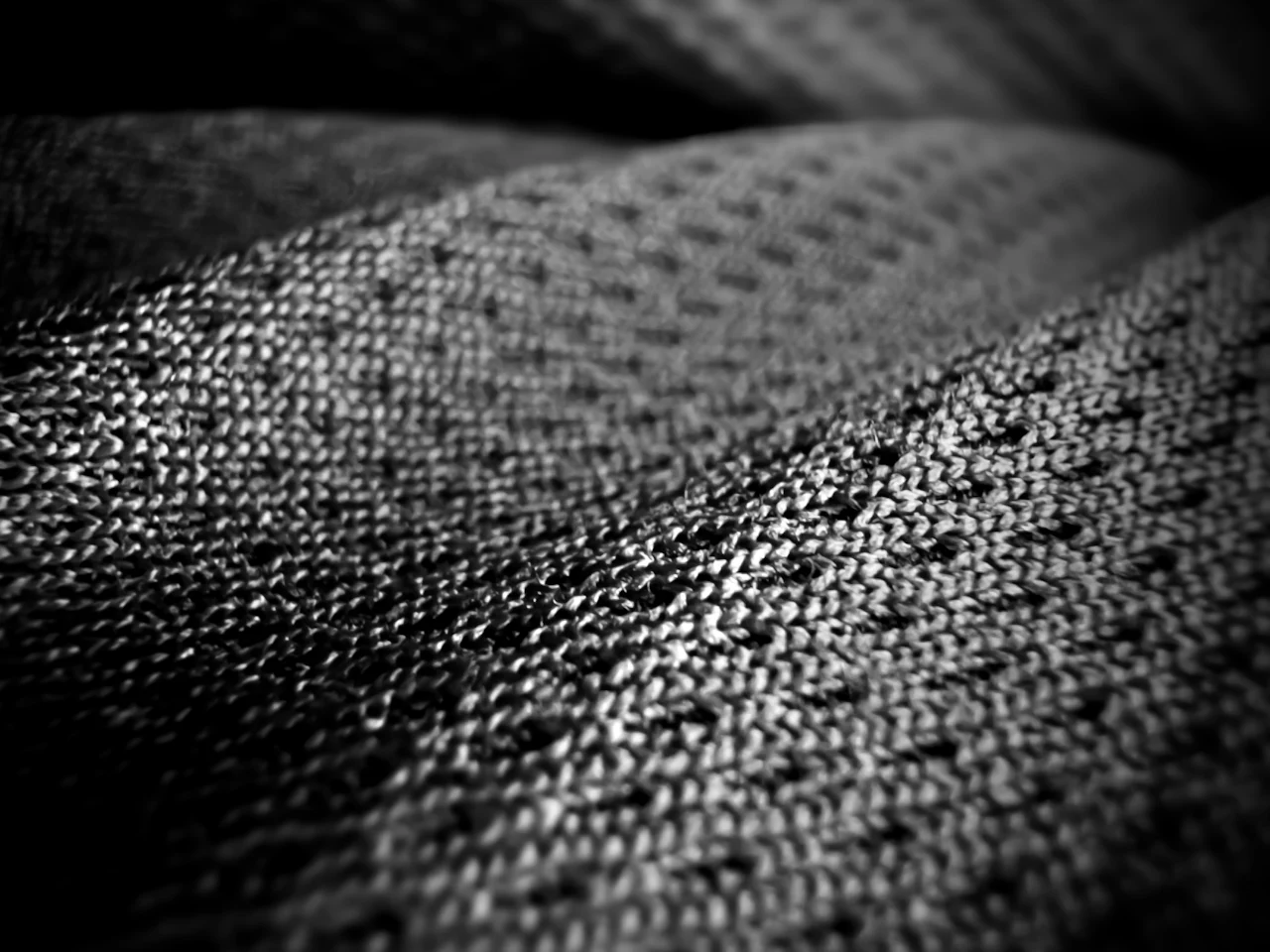
Polyester is a synthetic filament, and its commercial advantage is consistency. Because the fibre is extruded rather than harvested, lot-to-lot variation is minimal, colour is disperse-dyed to a high fastness, and the cloth holds its dimensions through wash and wear. For programmes that repeat season after season, or uniforms that must look identical across thousands of units, that predictability is worth more than any hand-feel argument.
Modern polyester is no longer defined by the harsh handle of older generations. Microfilament yarns, texturising and peached finishes produce fabrics with real softness and a matte surface, and polyester crepes now compete directly with viscose for drape. Where it still differs is moisture: polyester does not absorb water, which makes it fast-drying and dimensionally stable but less breathable next to skin unless the construction is engineered for wicking.
Recycled polyester, spun from post-consumer PET, is now a standard option rather than a specialist one. It performs comparably to virgin polyester in most constructions. Where a recycled content claim is to be made commercially, it should be backed by the relevant certification on that specific article rather than asserted generally.
Fabric Types
Recommended Applications
Production Notes
- Disperse dyes can sublimate under heat — confirm pressing and transfer-printing temperatures before bulk.
- Static build-up is common in dry conditions; an antistatic finish is worth specifying for linings.
- Recycled content should only be claimed where certification exists for that article.
Request a Quote
Share the specification you are working to and our team will help you evaluate the right fabric options.